Book Categories:

Sewing Accessories & Parts Guide
Bobbin Classes: Class 15 vs 15J vs 66 vs L – Complete Compatibility Guide

Share:
Book Categories:

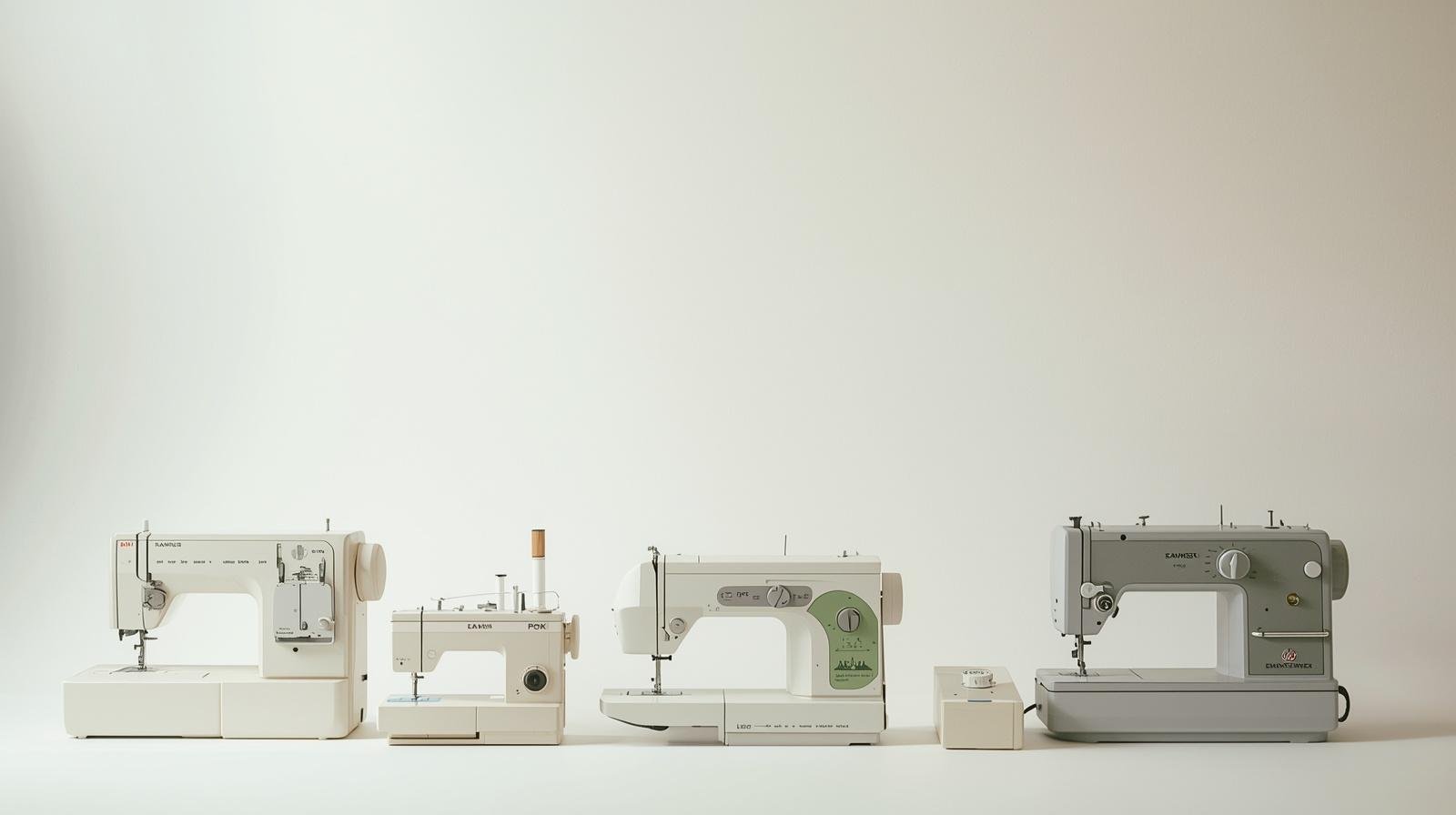
Bobbin class confusion is one of the most common problems I see in my repair shop. You bring home a pack of bobbins from the craft store, pop one in, and your machine skips stitches or the bobbin case won't latch. Nine times out of ten, it's the wrong class.
See also Bobbin tension. See also Identifying bobbin types. See also Bobbin case types.
This guide covers the major bobbin classes — Class 15, 15J, 66, L, and top drop-in styles — so you can identify exactly what your machine needs. Every bobbin class has specific dimensions for diameter, height, and hole size. Get those right and your machine will sing.
A bobbin class defines the physical dimensions of a sewing machine bobbin — the overall diameter, width/height, the flange style (flat or curved), and the center hole diameter. Unlike needles, there's no single global standard. Each manufacturer designed their own class, and many are incompatible.
The good news is that after decades of fragmentation, the industry has settled on a few dominant classes. Class 15 (also called Singer 15 or just “standard metal”) is the most common. If you own a sewing machine made after 1990, it almost certainly takes Class 15 bobbins — either metal or plastic.
Always use the bobbin class specified in your machine manual. Using a bobbin that's too large can jam your hook assembly. Using one that's too small will cause tension problems and skipped stitches.
Class 15 bobbins measure 20.3 mm (0.8 inches) in diameter and 11.2 mm (0.44 inches) in height. They have a flat flange with no curved edges. The center hole is roughly 6.3 mm. These are metal bobbins, usually nickel-plated steel or brass.
You'll find Class 15 metal bobbins in Singer, Brother, Janome, Juki (home), Pfaff, Husqvarna Viking, and Bernina machines — virtually every modern front-loading machine. If your machine has a removable bobbin case that slides into the front of the machine, it takes Class 15 bobbins.
Schmetz doesn't make bobbins, but Organ does. Organ part number OP-15 is a standard nickel-plated Class 15 bobbin. Groz-Beckert part number 10-1 001 011 is another. You can buy these by the dozen for a few dollars. Don't cheap out — I've seen dollar-store bobbins with rough edges that shred thread.
One thing to watch: Class 15 bobbins from different manufacturers can vary by tenths of a millimeter. A Brother Class 15 bobbin might be 20.3 mm while a Singer Class 15 is 20.5 mm. Those tenths matter. Stick with OEM bobbins for your brand if possible.
Class 15J bobbins have exactly the same dimensions as Class 15 — 20.3 mm diameter, 11.2 mm height. The difference is the material. Class 15J is made of clear or white plastic instead of metal. The “J” stands for “Janome,” but other brands use them too.
Class 15J bobbins were introduced for machines with vertical drop-in (top-loading) bobbin systems. The plastic material is lighter and won't damage the hook if the bobbin case isn't properly tensioned. They're also quieter than metal bobbins in top-loading machines.
You can use Class 15J bobbins in most front-loading machines that take metal Class 15 bobbins — but test first. Some front-loading bobbin cases grip the plastic differently, causing inconsistent tension. I recommend sticking with what your machine shipped with.
Organ part number OP-15P (the “P” stands for plastic) is the standard Class 15J bobbin. Brother part number SA155 (F081) is another common plastic Class 15. These are widely available and cheap.
Class 66 bobbins measure 20.3 mm in diameter — same as Class 15 — but they're taller at 12.8 mm (0.5 inches). The extra height comes from higher flanges. This extra height means they do not fit in machines designed for Class 15 bobbins. The bobbin case won't close.
These bobbins were used in Singer 66 models (hence the name) and Singer 99 models, both from the 1920s through the 1950s. They're also found in vintage White and Kenmore machines from the same era. If you have a pre-1960 Singer, check whether it takes Class 15 or Class 66.
Singer originally made Class 66 bobbins from brass. Modern reproductions are nickel-plated steel. Organ part number OP-66 is the current standard replacement. You can also find them as Singer part number 401948.
Important: Do not use a Class 66 bobbin in a Class 15 machine. The taller flanges will jam against the hook driver and can break the bobbin case latch. I've replaced three bobbin cases this year alone from this exact mistake.
Class L bobbins are small plastic bobbins measuring 18.1 mm in diameter and 9.5 mm in height — significantly smaller than Class 15. They have a distinctive shape with a slight taper on the flanges. These are used primarily in vintage European machines.
You'll find Class L bobbins in Elna machines (the Grasshopper, Stella, and Carina models), older Pfaff machines (130, 230, 260), and some vintage Bernina models (the 730 and earlier). They're also used in some Toyota home machines from the 1970s.
Class L bobbins are hard to find locally. Online specialty dealers carry them. Organ part number OP-L is the standard replacement. Groz-Beckert part number 10-1 004 020 also works. Buy a dozen — you don't want to run out mid-project and discover your local fabric store doesn't stock them.
The plastic material is important: Class L machines use a specific hook tension that relies on the flexibility of the plastic. Metal bobbins in these machines can damage the hook assembly. Do not substitute.
Many modern machines use a top drop-in (also called vertical drop-in or top-loading) bobbin system. These machines don't use a removable bobbin case. Instead, the bobbin drops directly into a compartment above the needle plate. The compartment has an integrated tension spring.
Brother machines with top drop-in (CS-6000i, HC series, SE series, most XR models) use Brother-specific plastic bobbins. They're visually identical to Class 15J but have slightly different dimensions. Brother part number SA156 (F019) is the exact replacement. Do not use generic Class 15J bobbins in these machines.
Janome top-loading machines (DC2013, DC5100, Memory Craft 6700P) use Class 15J bobbins. Janome explicitly recommends their own J-style bobbins (part number 213512). Singer top-loading machines (Quantum Stylist, Heavy Duty 4411) use Singer-specific bobbins that look like Class 15J but have a different flange profile.
Use a digital caliper — they cost $15 and will save you from buying the wrong bobbins. Measure the diameter (across the full circle) and the height (from the bottom flange to the top flange). Here's the quick reference:
Singer front-loading machines (Heavy Duty 4423, 4452, most older models) use Class 15 metal bobbins. Singer top-loading machines (Quantum Stylist 9960, Curvy 8763) use Singer-specific plastic bobbins. Vintage Singer 15-91, 66, and 99 use Class 66 bobbins. Vintage Singer 201 and 301 take Class 15 — not Class 66. This is a common mix-up.
Brother front-loading machines (all pre-2000 models, most CE series) use Class 15 metal bobbins. Brother top-loading machines (CS-6000i, HC1850, SE1900, all XR series) use Brother SA156 plastic bobbins. These are not compatible with standard Class 15J — they're slightly smaller in diameter.
Janome front-loading machines (DC series, HD series, Memory Craft 400E) use Class 15 metal bobbins. Janome top-loading machines (DC2013, DC5100, Memory Craft 6700P) use Class 15J plastic bobbins. Janome consistently uses Class 15J in all their newer machines.
Juki home machines (TL series, HZL series, G series) use Class 15 metal bobbins. Juki industrial machines (DDL-8700, DNU-1541) use industrial bobbins — larger diameter, different class entirely. Do not use home Class 15 bobbins in an industrial Juki.
Pfaff home machines (Ambition, Creative 1.5, Expression) use Class 15 metal bobbins. Vintage Pfaff 130, 230, 260, and 360 use Class L plastic bobbins. The design change happened around 1980. Check your machine age.
Bernina home machines (B 335, B 450, B 580, B 735, all older 800-series) use Class 15 metal bobbins. Bernina 730 and earlier vintage models use Class L plastic bobbins. Bernina 100-series and 200-series use a unique Bernina-specific bobbin — do not substitute.
Even if a bobbin fits in your machine, it also needs to fit on your bobbin winder. The center hole diameter varies between classes. Class 15 has a ~6.3 mm hole. Class 66 has a ~6.5 mm hole. Class L has a ~5.5 mm hole. If the hole is too small, the winder spindle won't engage.
Some machines have adjustable bobbin winders. Others do not. If your bobbin winder won't spin the bobbin, don't force it — you'll strip the winder tire or bend the spindle. Buy the correct class instead.
Related: Wrong Bobbin Type: Class 15 vs 15J vs 66, How to Identify
—
**Here's my take:** If you're hearing this sound or seeing this issue, don't panic. 90% of the time it's not a major repair — just a quick adjustment or cleaning. Let me walk you through exactly what to check first.
Sewing Machine Bobbin Winder Not Spinning: Diagnosis and Fix
Wrong Bobbin Type: Class 15 vs 15J vs 66, How to Identify
Bobbin Case Inserted Wrong Direction: How to Tell and Fix
Sewing Machine Tension Spring: Function, Cleaning, and Repla